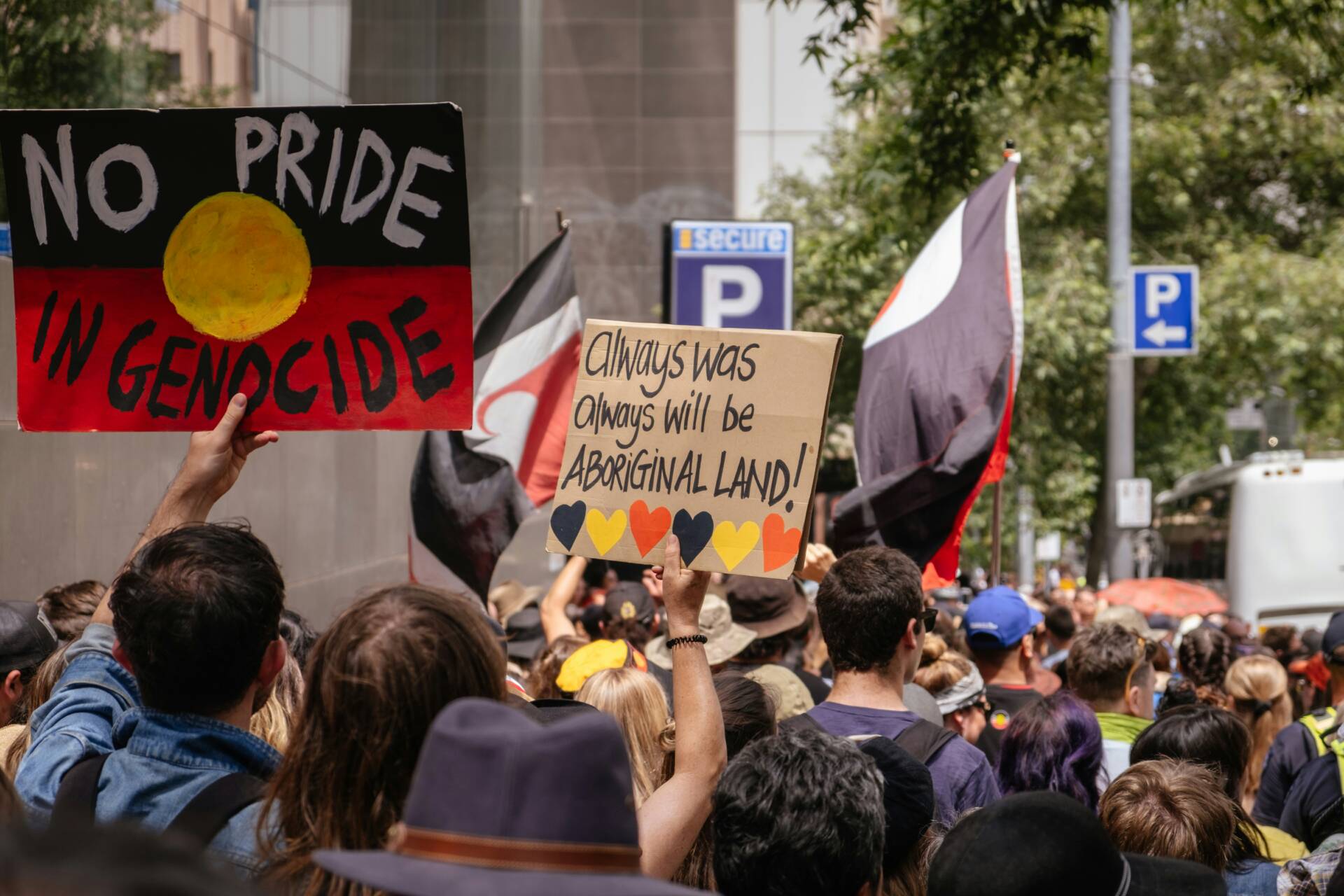
This January 26 thousands of people will be gathering across the country for a day of mourning or to speak out against the continued injustices experienced by Aboriginal and Torrest Strait Islander peoples.
Last year saw rallies and marches draw record crowds in some major cities.
If you are planning on attending a rally this year here are some things to keep in mind.
Know your rights.
Solicitor Rian Terell from the Redfern Legal Centre’s Police Accountability team says it’s important for people to know the protection they have under the law.
“You have a right to silence.
You don’t have to answer questions that the police ask you.
You can film the police but we recommend that you do that from a distance to ensure that the police don’t allege that you’re hindering or obstructing them.”
Principal Solicitor at Aboriginal Legal Service NSW/ACT Lauren Stefanou says its important to stay calm and cooperate when dealing with police.
“If you think there’s a problem, you can always make a complaint later.”

What should you do if you get arrested?
Terrel says if you are arrested or if you face charges, you should get legal advice before you have any conversations with the police or before the matter progresses.
If you are Indigenous, police are required by law to notify the local Aboriginal Legal Service or the Custody Notification Service.
Changes in New South Wales.
Invasion Day rallies will go ahead in Sydney despite an extension of Sydney’s protest restrictions in response to Bondi Beach shooting.
New South Wales Police Commissioner Mal Lanyon extended protest restrictions in parts of the CBD and the eastern suburbs, but does not include the route for the Invasion Day march to Victoria Park.
Commissioner Lanyon say they expect tens of thousands of people to take part in the march.
“There will be a significant police presence because a protest is authorised does not mean that hate speech, intolerance and threat to the community will be taken we’ll take matters seriously if that occurs.”
Ms Stefanou says in other parts of the state including parts of Sydney’s CBD, or in the city’ eastern suburbs protestors face more restrictions.
“If protesters are obstructing traffic, police can direct them to move on and failing to comply with a move on direction from police can lead to being fined or charged, even arrested along the way.”
On January 26 the New South/ACT Aboriginal Legal Service will be running a hotline between 10am and 2pm for on the spot advice.
The number for the hotline is (02) 9213 4199.
Photo by Johan Mouchet on Unsplash